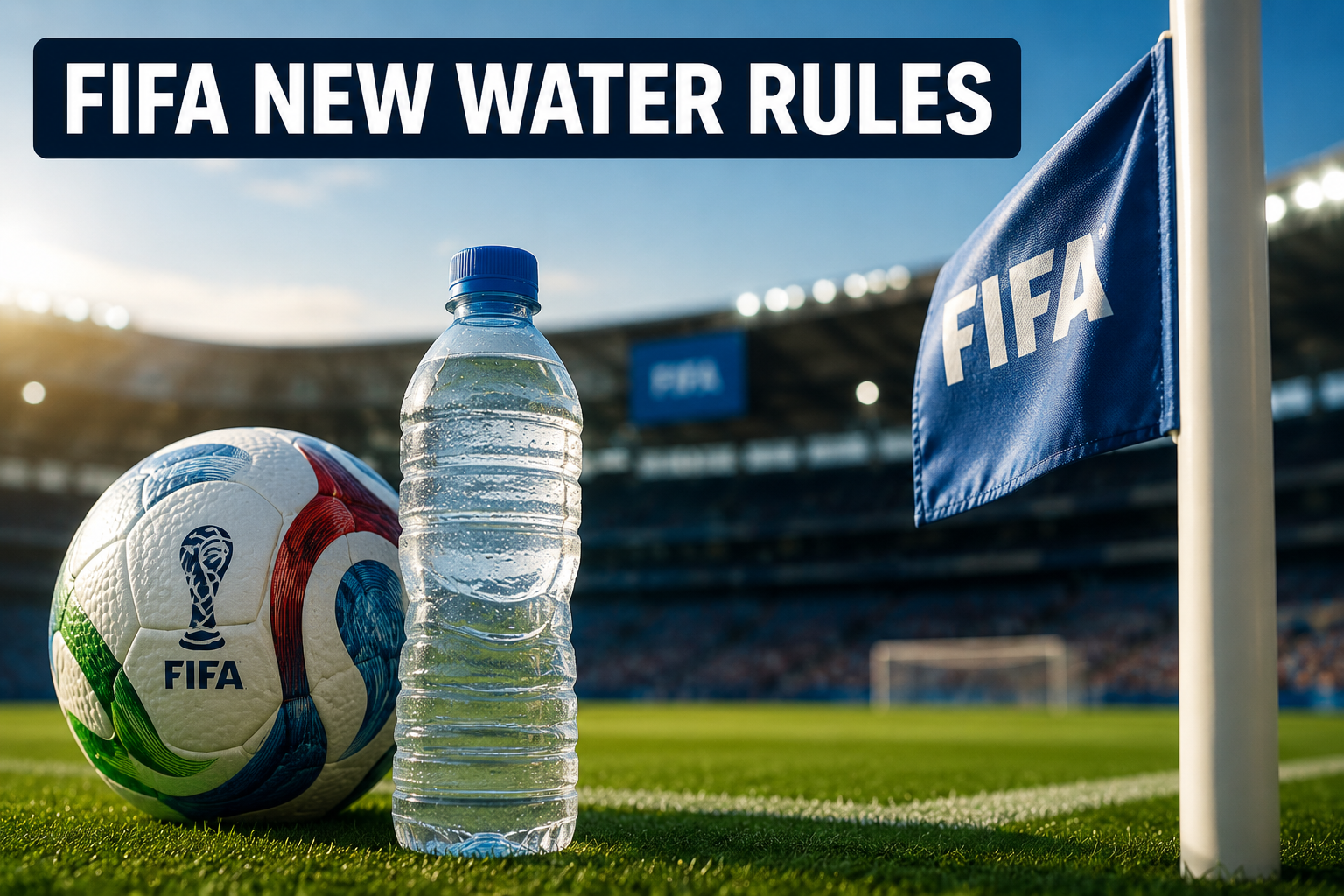
FIFA Introduces New Water Rules Ahead of the 2026 World Cup
The world’s biggest football tournament is still months away, but FIFA is already making changes that supporters and players will notice long before the first ball is kicked.
While discussions around the 2026 FIFA World Cup often focus on stadiums, teams and ticket demand, another topic has quietly moved into the spotlight: hydration. With the tournament set to be hosted across the United States, Canada and Mexico during the northern hemisphere summer, concerns about high temperatures and player welfare have become impossible to ignore.
As a result, FIFA has introduced new water-related regulations that will affect both spectators in the stands and players on the pitch.
The changes may appear simple at first glance, but they represent one of the most significant adjustments to matchday experiences and player safety protocols in recent tournament history.
Why FIFA Decided to Act
Football has evolved dramatically over the years, with governing bodies constantly reviewing rules to improve the game.
In recent years, extreme weather conditions have become a growing concern across global sport. High temperatures can affect player performance, increase fatigue and raise the risk of heat-related illnesses. The challenge becomes even greater during a month-long tournament where teams are expected to compete at the highest intensity.
With many 2026 World Cup matches expected to take place during warm summer conditions in North America, FIFA has chosen to take a proactive approach.
Rather than waiting to react to weather-related issues, the organisation has introduced measures designed to prioritise health and safety from the outset.
New Rules for Fans Attending Matches
Supporters travelling to stadiums will notice changes before they even take their seats.
Under the updated guidelines, fans attending matches in the United States and Canada will be allowed to bring one factory-sealed disposable plastic water bottle into stadiums. The bottle must be clear, soft plastic and cannot exceed 20 ounces, or approximately 590 millilitres.
The decision is intended to help supporters remain hydrated during long periods spent inside stadiums, particularly during daytime fixtures when temperatures could rise significantly.
However, not every type of bottle will be allowed.
Hard-sided reusable water bottles, metal flasks, insulated containers and thermoses will not be permitted inside venues. FIFA and local organisers have maintained these restrictions primarily for security reasons.
For supporters who arrive without a permitted bottle, water will still be available through stadium vendors and designated hydration stations.
Different Rules Could Apply in Mexico
Although FIFA has confirmed the bottle policy for venues in the United States and Canada, discussions are still ongoing regarding the final regulations for stadiums in Mexico.
Host organisers are continuing to assess local requirements and operational considerations before announcing their final guidelines.
This means supporters planning to attend matches in Mexico should pay close attention to updates closer to the tournament.
What is permitted in one host nation may not necessarily be allowed in another.
Hydration Breaks Become Mandatory
Perhaps the most significant change affects what happens during the match itself.
Traditionally, hydration breaks have been used only when temperatures reached certain thresholds or when extreme weather conditions created additional risks.
The new FIFA approach removes that uncertainty entirely.
Every World Cup match will now include mandatory hydration breaks during each half.
Referees are expected to pause play around the midway point of both halves, creating a three-minute break that allows players to drink fluids, cool down and receive instructions from coaching staff.
Importantly, these breaks will occur regardless of weather conditions.
Whether the match is played in extreme heat, mild temperatures or inside a climate-controlled stadium, the hydration pauses will still take place.
What This Means for Players
Modern football places enormous physical demands on athletes.
Players routinely cover long distances during matches while performing repeated high-intensity sprints, changes of direction and physical duels. Maintaining hydration is essential not only for performance but also for overall health.
The mandatory breaks provide players with a guaranteed opportunity to recover briefly before returning to action.
Medical experts have increasingly highlighted the importance of hydration in preventing heat exhaustion, muscle cramps and other health concerns associated with prolonged physical activity.
For coaches, the pauses also create small windows to communicate tactical instructions without waiting for halftime.
How the Matchday Experience Could Change
The impact of these new rules extends beyond player welfare.
Supporters may notice subtle changes to the rhythm of matches as teams use the hydration breaks to regroup and adjust their approach.
Some coaches could view the pauses as mini tactical timeouts, while players may benefit from the opportunity to recharge physically and mentally.
Inside the stadium, the ability to bring approved water bottles may also improve comfort for fans spending several hours at a venue before, during and after a match.
A Sign of Football’s Changing Priorities
The introduction of FIFA’s new water rules highlights a broader shift within the sport.
While football remains focused on competition and entertainment, there is growing recognition that health and safety must remain central to decision-making.
The 2026 FIFA World Cup is expected to attract millions of supporters and showcase the game’s biggest stars. By introducing new hydration measures for both fans and players, FIFA is attempting to ensure that everyone can enjoy the tournament in a safer and more comfortable environment.
Whether in the stands or on the pitch, staying hydrated will now be an official part of the World Cup experience.
The new regulations arrive as preparations continue across the venues that will host football’s biggest tournament. Read our article on the 2026 FIFA World Cup Stadiums and Host Cities Set to Make History.


Leave a Reply