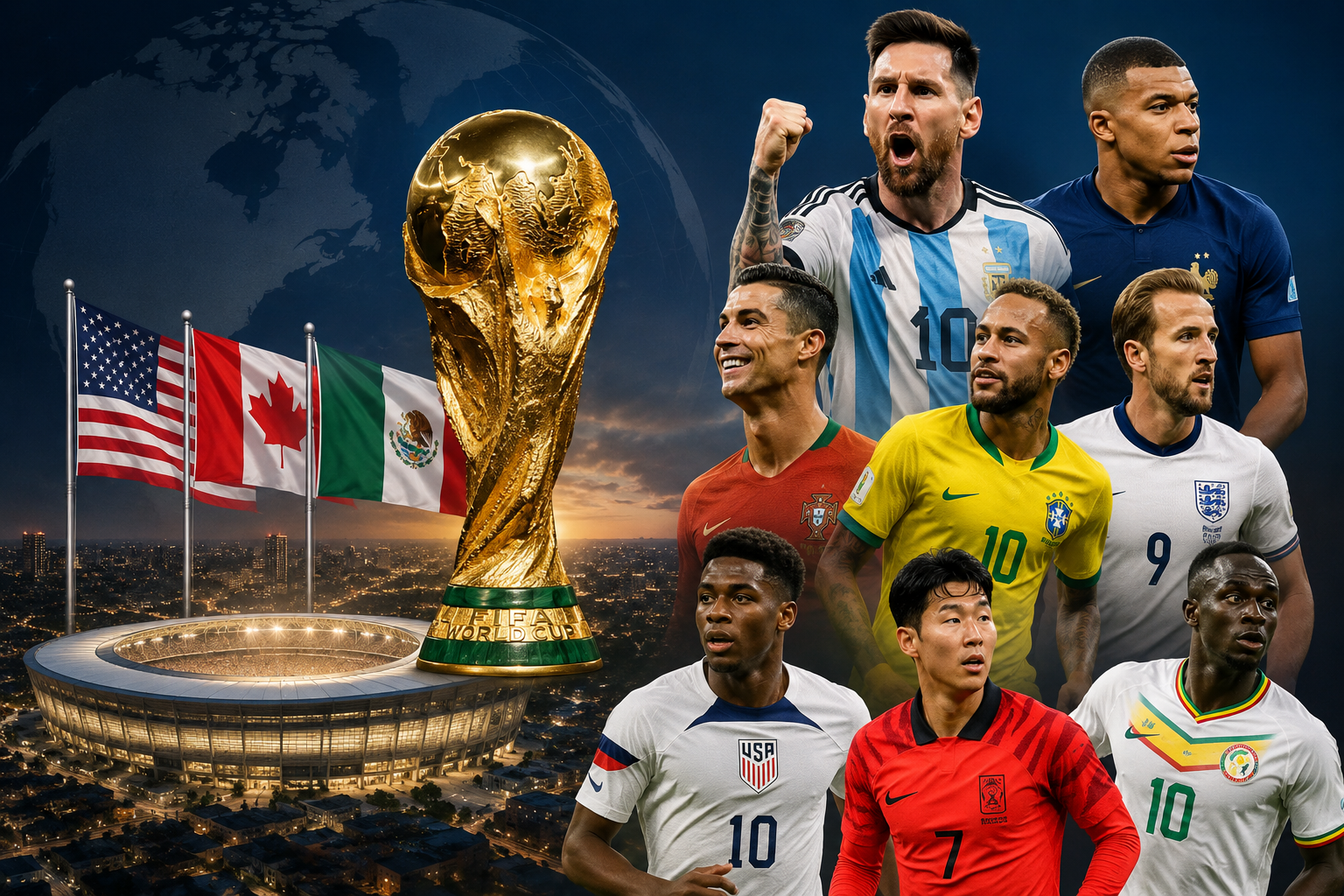
The 2026 FIFA World Cup Is Expected to Change the Business of Football Forever
The FIFA World Cup has always been more than a football tournament.
It is a global event that captures the attention of billions of people, brings nations together, creates unforgettable sporting moments and generates enormous economic activity. Every four years, the competition grows in scale, influence and commercial value. Yet even by World Cup standards, what is unfolding ahead of the 2026 tournament is unprecedented.
As teams prepare for football’s biggest stage, another remarkable story is developing away from the pitch.
According to projections, FIFA expects the 2026 FIFA World Cup to generate approximately $14 billion in revenue, a figure that would make it the most profitable tournament in the history of the sport. The number is particularly striking because it is roughly double the revenue generated during the 2022 World Cup in Qatar.
If those projections are achieved, the 2026 tournament will not simply be remembered for the football. It will be remembered as the event that redefined the financial potential of the modern World Cup.
A Tournament Built on a Different Scale
To understand why the projected revenue is so significant, it is important to understand how different the 2026 World Cup will be from every edition that came before it.
For the first time in history, the tournament will feature 48 national teams instead of 32. The expansion means more matches, more supporters, more television audiences and greater commercial opportunities.
The tournament will also be hosted by three countries: the United States, Canada and Mexico.
That alone creates access to some of the largest sports markets in the world.
Previous World Cups have often been concentrated in a single nation. The 2026 edition will spread across dozens of cities and some of the most advanced sporting venues on the planet.
More teams and more matches naturally create more opportunities for revenue generation.
But the financial potential extends far beyond ticket sales.
The Power of the North American Market
One of the biggest reasons behind FIFA’s revenue expectations is the strength of the North American market.
The United States remains one of the most lucrative sports and entertainment markets globally. Major sporting events held in the country regularly attract enormous sponsorship deals, broadcasting contracts and commercial partnerships.
For FIFA, the opportunity is obvious.
The World Cup will be played in front of massive audiences across North America while also reaching billions of viewers worldwide.
Sponsors understand the value of that exposure.
Global brands are willing to invest heavily when they know their products and services will be visible during one of the most-watched events on Earth.
That commercial demand is expected to contribute significantly to FIFA’s record-breaking revenue projections.
More Matches Mean More Opportunities
The expansion from 32 teams to 48 teams is one of the most important changes in World Cup history.
While much of the discussion has focused on the sporting implications, the business impact is equally important.
More teams mean more participating countries.
More participating countries mean more supporters travelling, watching broadcasts and engaging with tournament content.
The expanded format also increases the number of matches played.
Every additional game creates opportunities for ticket sales, broadcasting rights, sponsorship exposure and hospitality packages.
For FIFA, the larger tournament creates additional value across almost every commercial category.
It is one of the key reasons why revenue projections have reached levels never previously associated with a World Cup.
Broadcasting Remains the Financial Engine
Television and media rights continue to represent one of FIFA’s most valuable assets.
Although digital platforms are growing rapidly, broadcasters still pay enormous amounts for the right to show World Cup matches.
The tournament remains one of the few global events capable of attracting massive audiences simultaneously across multiple continents.
Advertisers understand this reality.
When millions of people watch the same match at the same time, commercial opportunities become incredibly valuable.
As media consumption evolves, FIFA has also expanded its digital presence, creating additional streams of revenue through online content, streaming partnerships and digital engagement.
The result is a tournament that generates value far beyond the ninety minutes played on the field.
Sponsorships Reach New Heights
The modern World Cup is supported by a vast network of sponsors.
From airlines and financial institutions to technology companies and consumer brands, businesses compete for the opportunity to associate themselves with football’s biggest event.
The 2026 tournament is expected to attract some of the largest sponsorship investments ever seen in international sport.
Companies recognise that the World Cup provides a unique platform to connect with audiences from virtually every corner of the globe.
For FIFA, these partnerships represent a major component of overall revenue.
The combination of sponsorships, broadcasting agreements and licensing deals creates a financial ecosystem unlike anything else in football.
The Impact Beyond FIFA
While FIFA stands to benefit financially, the tournament’s economic impact extends much further.
Host cities are preparing for millions of visitors.
Hotels, restaurants, transportation providers and local businesses are expected to experience significant increases in activity throughout the competition.
The tourism benefits alone could generate billions of dollars across the three host nations.
Infrastructure improvements, employment opportunities and international exposure also contribute to the broader economic picture.
For many cities, hosting World Cup matches represents an opportunity to showcase themselves to a global audience.
The long-term benefits often continue long after the final whistle has been blown.
Can the Tournament Justify Its Size?
The expansion of the World Cup has not been without debate.
Some football observers have questioned whether a 48-team tournament could dilute the quality of competition.
Others have expressed concerns about scheduling demands and player workloads.
However, FIFA believes the expanded format will create more opportunities for nations to participate while also increasing global interest in the competition.
From a business perspective, the numbers suggest the strategy is working.
The projected revenue figures indicate strong commercial confidence in the expanded tournament model.
Whether supporters ultimately embrace every aspect of the new format remains to be seen, but financially the tournament appears positioned for extraordinary success.
Football’s Most Valuable Event
The World Cup has always occupied a unique place in global sport.
No other football competition combines such extensive international participation with such massive worldwide interest.
The 2026 edition appears ready to elevate that status even further.
A projected revenue figure of approximately $14 billion is not merely a financial statistic. It reflects the extraordinary growth of football as a global industry.
It also demonstrates how the World Cup continues to evolve beyond a sporting event into a worldwide cultural and commercial phenomenon.
A Tournament That Could Set New Standards
When supporters look back on the 2026 FIFA World Cup years from now, they will remember goals, celebrations, heartbreaks and historic performances.
Yet behind those moments will be another achievement.
This tournament is on course to become the most profitable World Cup ever staged.
If projections become reality, FIFA will not only oversee the largest World Cup in history. It will oversee the most commercially successful one as well.
And in doing so, the organisation may reshape the business of football for generations to come.

Leave a Reply