There was a strange feeling around Orlando Pirates after their 3-1 victory over La Cure Waves in the CAF Champions League.
The Buccaneers had won. They had recovered from conceding early, scored three goals and booked their place in the next stage of the competition. For supporters, it should have been a night to enjoy.
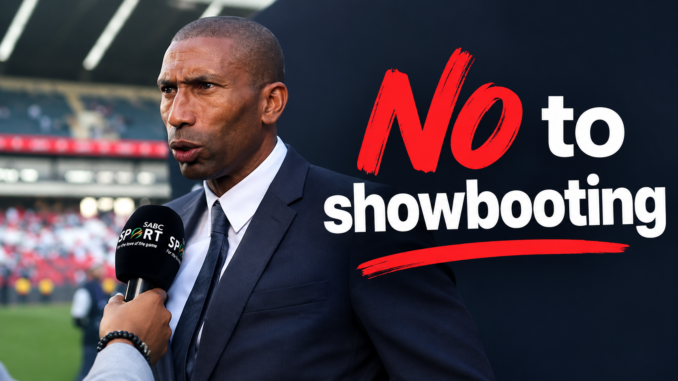
But instead of focusing only on the result, coach Abdeslam Ouaddou left the stadium talking about something that has been part of South African football for generations: showboating.
And his message was not subtle.
Ouaddou was unhappy with the way Pirates approached parts of the second half after taking control of the match. According to the coach, the intensity dropped and the players became more interested in entertaining with the ball than looking for more goals.
His strongest warning was this:
“I will not accept showboating in my team.”
He then took it even further, saying that if the behaviour continued, he would rather pack his bags and stop coaching the team.
That is where many Pirates supporters began asking questions.
But Pirates had already won
This is what makes the debate interesting.
The supporters were not watching a team that was losing 3-0 while players were performing unnecessary tricks. Pirates were leading 3-1 and eventually won by that scoreline. The result also completed a 3-1 aggregate victory after the first leg had ended goalless.
For the average supporter in the stands, there is a completely different emotion when your team is comfortably ahead.
That is when the skills come out.
That is when the crowd starts making noise every time a player produces a piece of skill.
That is when a simple pass can become a shibobo, a step-over or a little bit of individual flair designed to get the supporters on their feet.
And this is not something that suddenly appeared in South African football.
It is part of the country’s football identity.
For many supporters, what coaches may call showboating is simply Kasi flavour — the creativity, confidence and personality that have always made South African football entertaining.
The supporters understand the coach, but they also understand the players
There is an argument behind Ouaddou’s frustration.
The coach is looking beyond one match.
A 3-1 lead against La Cure Waves is one thing. The later stages of the CAF Champions League are another.
Ouaddou believes Pirates need to develop the mentality of a team that wants to compete for the trophy. His complaint was not simply about a player doing a trick. He was concerned that the intensity dropped and that chances to score more goals were not being taken. He said Pirates could have scored several more times if they had maintained their rhythm.
That explains his frustration.
But it does not necessarily mean supporters will stop enjoying the flair.
There is a reason fans celebrate players who can embarrass an opponent with the ball. Football is not only about the final score. For many South African supporters, the entertainment is part of the experience.
This is particularly noticeable at development level, where young players are encouraged to express themselves. Players such as Mpho “Phopho” Padime have attracted attention for their flair in the DStv Diski Challenge, where supporters often react loudly to individual skill and creativity.
So when a coach arrives and says there should be no showboating, some supporters naturally wonder whether he is asking players to remove an important part of their football identity.
Where does flair become showboating?
Perhaps that is the real question Ouaddou has accidentally placed on the table.
There is a difference between using skill to beat an opponent and performing a trick simply because the moment looks entertaining.
A winger beating his defender with a step-over before delivering a cross is part of football.
A midfielder keeping possession under pressure with a clever piece of skill can also be useful.
But repeatedly attempting unnecessary tricks when there is a better passing option is something different.
That appears to be the distinction Ouaddou is trying to make.
His concern is that the individual moment should never become more important than the team.
As he explained after the La Cure Waves match, his priority is goals and maintaining the intensity needed to compete at Champions League level.
The difficulty is that football supporters do not always see the game through the same lens as a coach.
A coach sees the next opponent.
A supporter sees the moment.
The coach sees a lost attacking opportunity.
The supporter sees a beautiful piece of skill.
Both are watching the same football match, but they are experiencing it differently.
Pirates’ history makes this debate even more interesting
There is also a historical reason why the conversation around Pirates and flair feels so familiar.
The club has traditionally been associated with entertaining football and players who are comfortable expressing themselves with the ball.
Former Pirates players such as Steve “Chippa” Lekoelea became fan favourites partly because of their ability to entertain. Lekoelea has since weighed in on the current debate, explaining that during his playing days he sometimes prioritised flair because he knew supporters wanted to see it.
That tells you something about the relationship between South African footballers and the people watching them.
The supporters are not simply asking for victories.
They also want moments they can remember.
A nutmeg.
A step-over.
A clever flick.
A player standing over the ball and inviting the defender to come closer.
Those moments may not appear on the final score sheet, but they are often the moments supporters talk about on the way home.
Then there is Ouaddou’s “pack my bags” warning
This is probably the part of the coach’s comments that has created the biggest reaction.
Saying that showboating needs to be reduced is one thing.
Saying you will pack your bags if it continues is something much bigger.
Ouaddou made it clear that his football philosophy is built around seriousness, intensity and scoring goals. He does not want to accept a situation where individual entertainment takes priority over the team’s objective.
Some former Pirates figures have questioned the tone of that message.
Former captain Lucky Lekgwathi, for example, described the latest exit warning as unsettling, while other former players have entered the debate over whether Pirates should embrace more of their traditional flair.
That is why the issue has become bigger than one match.
It is now a conversation about what kind of football Pirates want to play.
Maybe the answer is somewhere in between
South African football does not have to choose between winning and flair.
A player can entertain without losing concentration.
A team can protect a lead while still playing with personality.
And a coach can demand discipline without necessarily removing creativity from his players.
The important question is what happens when the two collide.
If Pirates are winning 3-1 and a player produces one piece of skill before making the correct pass, most supporters are unlikely to complain.
But if the same player repeatedly chooses tricks over opportunities to attack, and the team loses momentum because of it, the coach’s frustration becomes easier to understand.
That seems to be the heart of Ouaddou’s argument.
He is not simply saying that football must be boring.
He is saying that the entertainment should not become more important than the objective.
For Pirates supporters, however, there is another side to the story. They want their team to win, but they also want to see the personality that has always made South African football special.
Perhaps the real challenge for Ouaddou is not eliminating flair altogether.
It is teaching his players when to use it.
Because when the score is comfortable, the crowd is singing and a player has the ball at his feet, asking South African footballers to completely switch off that instinct may be much easier said than done.

Leave a Reply