The 2026 FIFA World Cup is expected to deliver unforgettable moments on the pitch, but long before the tournament reaches its decisive stages, another battle is already taking place behind the scenes.
This battle has little to do with tactics, formations or star players.
Instead, it is about weather, altitude and survival in demanding playing conditions.
As teams complete their final preparations, coaches and medical staff are focusing on challenges that supporters may never fully see. From intense summer temperatures to high-altitude venues, the environment itself is becoming an opponent that every nation must overcome.
One of the clearest signs of that reality is the growing discussion around substitutes being kept indoors during matches to protect them from extreme heat. While football fans are accustomed to seeing reserve players sitting beside the pitch throughout games, the conditions expected at some World Cup venues have forced teams to rethink traditional routines.
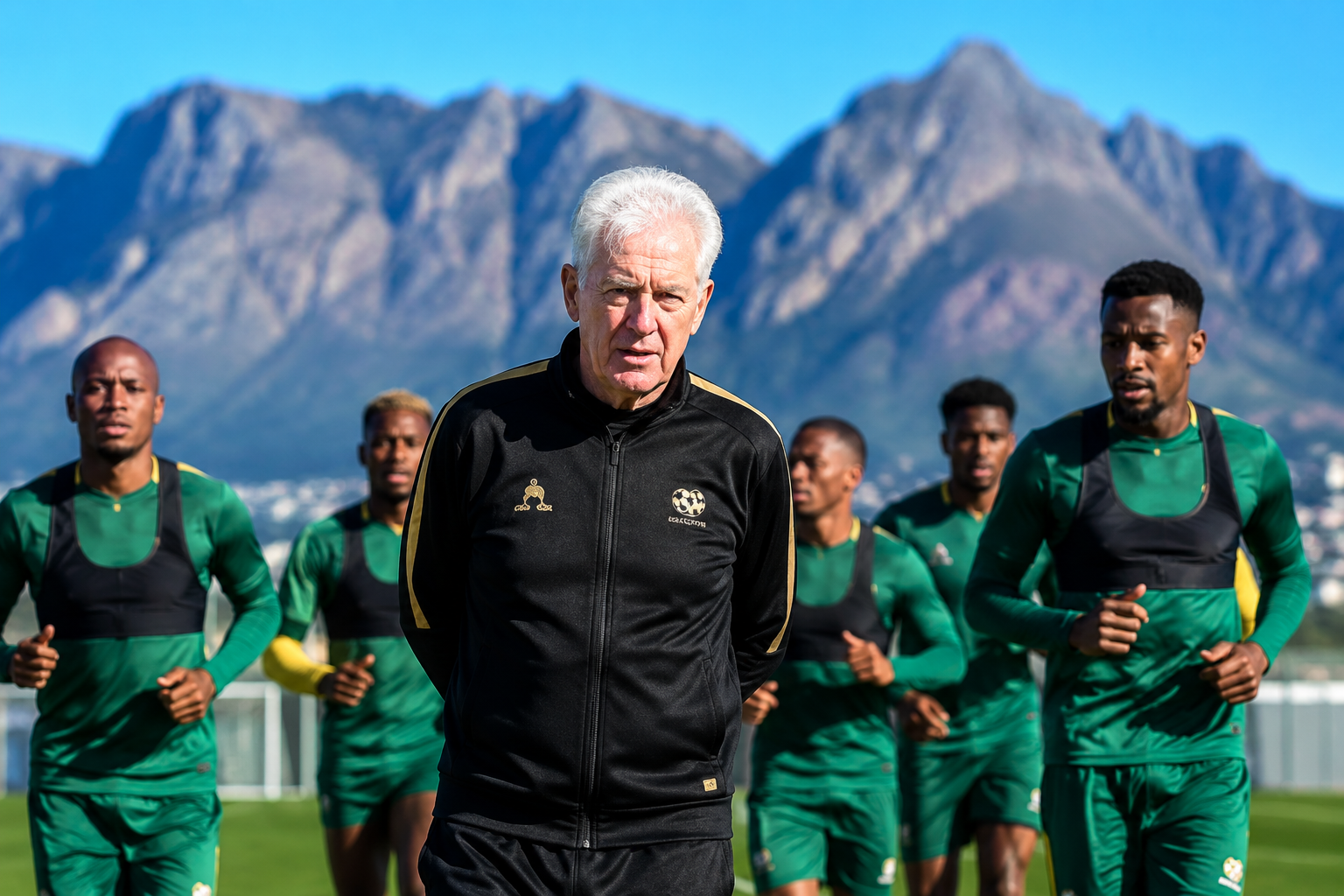
For South Africa, the conversation has become especially relevant as Bafana Bafana continue adapting to conditions that differ significantly from those encountered during their regular international calendar.
A World Cup Unlike Any Before
The 2026 tournament will be historic for several reasons.
It will be the largest FIFA World Cup ever staged, featuring more teams and more matches than any previous edition. It will also be hosted across three countries – the United States, Canada and Mexico.
While that geographical scale creates exciting opportunities, it also presents unique challenges.
Teams will travel between different climates, elevations and weather patterns throughout the competition. Some cities offer relatively mild conditions, while others are expected to experience intense heat during the summer months.
For coaches, preparing players physically has become just as important as preparing them tactically.
The difference between success and failure could come down to how effectively a team manages fatigue and recovers between matches.
Why Substitutes Are Being Kept Indoors
Football has traditionally kept substitutes close to the action.
Players waiting to enter the field normally remain on the bench, watching the game while staying ready for instructions from coaches.
However, concerns about heat exposure have led some teams to adopt a different approach.
Medical experts have warned that prolonged exposure to high temperatures can affect hydration levels, recovery and overall physical performance. As a result, some squads are choosing to keep substitute players inside cooler indoor areas for portions of matches.
The objective is simple.
Rather than sitting in direct sunlight for extended periods, players can remain in temperature-controlled environments until they are required to warm up or enter the game.
This strategy allows coaches to preserve energy levels while reducing unnecessary physical stress on players who may be called upon during crucial moments.
In a tournament where margins are often extremely small, every advantage matters.
FIFA’s Increased Focus on Player Welfare
The conversation surrounding heat management reflects a broader effort to prioritise player welfare.
FIFA has already introduced mandatory hydration breaks during matches as part of its approach to dealing with challenging weather conditions.
These breaks are designed to provide players with opportunities to cool down, rehydrate and receive medical attention if necessary.
The governing body understands that modern football places enormous physical demands on athletes.
When those demands are combined with high temperatures and altitude, the risks become even greater.
For that reason, teams are taking every precaution available.
What once may have seemed unusual is quickly becoming part of normal tournament preparation.
South Africa’s Challenge Goes Beyond Heat
While many teams are discussing temperature management, Bafana Bafana are facing an additional obstacle.
Altitude.
South Africa have been preparing in Mexico, where several venues sit at significantly higher elevations than many players are accustomed to experiencing.
High altitude can have a noticeable impact on athletic performance.
The thinner air means less oxygen is available, which can affect endurance, recovery and the ability to maintain intensity over long periods.
Even highly conditioned professional athletes can require time to adjust.
That reality has not escaped Hugo Broos.
Broos Highlights the Importance of Adaptation
Speaking during South Africa’s preparations, the Bafana Bafana coach acknowledged that altitude has already influenced some training sessions and performances.
Broos admitted that adaptation remains a work in progress.
“We need a few more days to adapt to the high altitude,” the coach explained.
His observations reflected what he had seen among several players.
“I could see yesterday that some players couldn’t make the efforts we wanted. It’s certainly because of the altitude here.”
The comments offered an honest assessment of the challenges facing the squad.
Rather than making excuses, Broos was identifying an issue that requires time and patience to overcome.
Fortunately for South Africa, adaptation is precisely why teams arrive before tournaments begin.
The coaching staff will hope that every additional training session helps players become more comfortable with the conditions.
Physical Preparation Could Decide Results
Major tournaments are often analysed through the lens of tactics and individual talent.
While those factors remain important, physical preparation frequently proves just as decisive.
A team capable of maintaining intensity in difficult conditions can gain a significant advantage over opponents who struggle to cope.
This is especially true during the latter stages of matches.
As fatigue increases, concentration levels can drop and defensive mistakes become more common.
Teams that manage energy effectively often find themselves stronger when matches enter critical phases.
That is why adaptation strategies have become such a significant part of World Cup planning.
Whether it involves hydration protocols, recovery programmes or altitude acclimatisation, every detail matters.
Learning to Thrive in Difficult Conditions
The encouraging news for South Africa is that adaptation is a gradual process.
Players typically improve as their bodies become accustomed to environmental demands.
The early signs of fatigue observed by Broos do not necessarily indicate long-term problems.
Instead, they are often a normal part of the adjustment period.
Many teams throughout World Cup history have faced similar challenges and eventually found their rhythm once the tournament began.
The key is ensuring those adjustments happen quickly enough to influence performances when points are at stake.
The Hidden Battle of the World Cup
Supporters will focus on goals, saves and dramatic moments when the tournament begins.
Yet some of the most important battles may occur away from television cameras.
Medical teams, fitness coaches and sports scientists will work tirelessly to help players perform at their best despite difficult conditions.
The decision to keep substitutes indoors, the emphasis on hydration and the focus on altitude adaptation all highlight the evolving nature of modern football preparation.
As Bafana Bafana continue their journey toward the opening match, Hugo Broos and his squad understand that success will require more than technical quality alone.
They must first conquer the environment.
If South Africa can successfully adapt to the heat, altitude and physical demands of the tournament, they will give themselves the best possible chance of competing on football’s biggest stage.

Leave a Reply